-

Basic Marketing
Author: Joanna Lynn L. Mercado
The marketing world today is very much different from it was years ago. Today, market enterprises use modem communication technologies such as email, fax machines, Internet. World Wide Web in their marketing transactions to help making them cross boundaries with ease_ With globalization and applications of quantitative tools in marketing as the trend, modern marketing managers, marketing instructors and students have to equip themselves with modem know- how of the basic principles of marketing for them to meet the challenges in this rapid changing world of marketing.
The primary aim of this learning material is to provide readers with a complete, precise and up-to-date explanation of the principles of marketing.
The outline, within which the context of this material is presented, focuses mainly on the following
Lesson 1. An overview of marketing is the concept of the first lesson. It gives the definition of marketing, the marketing mix, as well as, the 4 C's of marketing.
Lesson 2. This part focuses on the classification of market, the concept of market segmentation, target marketing, and positioning for competitive advantage.
Lesson 3. It explores customer behavior and characteristics. It talks about consumer buying behavior and consumer market. It also includes is the discussion on the buying behavior of the Filipino consumers.
Lesson 4. It centers on the “product and service. The lesson presents product label and product classifications. It also covers an explanation on new product development and process, and product life cycle.
-
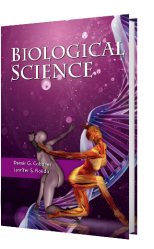
Biological Science (Caballes)
Authors: Dennis G. Caballes, Jennifer S. Florida
The concept approach of the book is suitable for undergraduate non-Biology major students. The book is designed to be useful workbook for students enrolled in Biology subject. It is divided into eight units which cover major topics such as cell biology, genetics, evolution, ecology, biological diversity and plant and animal biology. Each part has balanced coverage of all topics sufficient for a semester-long course in Biology. The authors considered these topics as important pans of biology which will provide the core knowledge in science.
The opening unit of the book gives an overview of how the field of Biology is studied and explored using scientific method. Unit II deals with biological molecules that account for the structure, function and even the origin of cells. The next unit provides discussion on energy and metabolism which is the central phenomena in the study of biological organisms. It is followed by the study of heredity and the evolutionary process in the heritable characteristics (Unit IV). Basic ecology concepts are introduced in Unit V while biodiversity is main focus of discussion of Unit VI. The last unit deals with plant and animal biology. Each chapter included in every unit is provided with self-assessment part which includes quick recall questions and questions that elicit critical thinking. Moreover, helpful materials that would reinforce learning are appended towards the end in an effort to provide additional information among the users of this book. Furthermore, laboratory exercises are incorporated for each chapter in order to supplement the concepts learned in the lecture and to make them responsible in their own learning through manipulation and discovery.
The authors of this book have been friends and colleagues for several years and, while they have often discussed writing a book together, the timing never seemed quite right. Finally, they put their heads together to come up with a “generic” book suitable for non-science students with different major and coming from various institutions. The authors' collection of lecture notes from several years of teaching Biology is the basis of the content of this book. Any comments or suggestions for the improvement of this book will be appreciated.
-
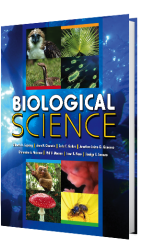
Biological Science (Cajuday)
Authors: Lilibeth A. Cajuday, Anne R. Dioneda, Carlo F. Galias, Jonathan Jaime G. Guerrero, Charmaine A. Malonzo, Phil V. Morano, Joan R. Nace, Jocelyn E. Serrano
Teaching a pure science to non-science majors is a hard task. Teachers are faced with the challenging problem of explaining the complex structures of cells or the intricate chemical pathways in a simple and, in a sense, artful way. Vis-a-vis this simplicity is not losing the basic concepts. Striking a balance takes up a lot of creativity, of board and seat works, and other methodologies to bring home the message to students.
Finally, this book creates another stepping stone in understanding the science of life. Unlike other textbooks, this Biological Science reference material takes into consideration the actual semestral time frame. It is equipped not just to teach directly but also to encourage self-exploration and culture of research. Besides, a university is a university because it is a generator of knowledge through a prolific research culture among students.
Given this, it is the hope of the authors that this book serves its purpose. The study of biology is an interesting field regardless of background or skills and competencies. It is perhaps the most practical among the many branches of science. It does not talk about things too farfetched or blurred. It talks about our very self. We, you are the best manifestation of life. Thus, this book is about you, a narration of our physicalities and an explanation of our biological being.
-
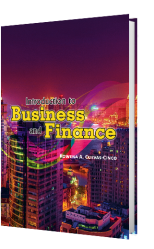
Business and Finance
Author: Rowena A. Cuevas-Cinco
“The most important adage and the only adage is, the customer comes first, whatever the business, the customer comes first
– Kerry Stokes
This book started as a concept paper on business finance and gradually, the compilation of materials from various authors of other business books and newspaper articles on business and finance, as well as the gathering of comments/suggestions of friends and family, creating it into a study guide for the introduction for business and finance. Fin 21 is a 3 unit course in the College of Business Administration with a description of Introduction to Business and Finance. The syllabus of the course is included in the manuscript. This book serves as a guide for business students, and would be entrepreneurs.
The first part of the book is about the external environment of the business in a Philippine setting. It includes the economic system and business environment of the country, legal forms of business and the social infrastructure of business. The second part of the book is about business operations which technically is the internal environment of the business. It includes the different perspective of management, marketing concepts, production, human resources and information systems or the technology business has to deal with presently. The third part of the book is about financing operations. It gives a background about finance particularly on the Philippine financial system and monetary system. It includes the credit management most.
-

Bussiness Mathematics
Authors: Jocelyn L. Reyes, Gemma S. Legaspi, Lourdes P. Gonzales
Business Mathematics, sometimes called consumer math or commercial math, is mathematics used by commercial enterprises to record and manage business operations. Business mathematics is an important tool in accounting, inventory management, marketing: sales forecasting and financial analysis.
The emphasis of Business Mathematics in the tertiary curriculum is on computational skills and practical application. It also includes a review of elementary arithmetic including fraction, decimals and percentages. The practical applications typically include checking accounts, price discounts, markups and markdowns, payroll calculations, and simple and compound interest Luckily, even if mathematics is not one of the student's strengths, there are several avenues available for learning business math. The syllabus-based work text in Business Mathematics is one of them.
Although many of the skills necessary for business success are related to interpersonal savvy and marketplace knowledge, most well-rounded business people need to know basic math skills, ideal for financial reports and other vital business documentation.
Business mathematics prepares the students in making general business decisions, like whether to expand into a new branch, whether to hire another employee, or if a commodity is marketable. Knowledge of business mathematics makes calculations less tedious and time-consuming, saving the business and its customers time and money.
-
Creative Nonfiction: A Journey
Authors: Rolando A. Bernales, Wilma J. Balon, Ramir B. Geronimo, Vanesa Amor T. Aldaca
Newly Released
-

English for Academic and Professional Purposes
Authors: Rolando A. Bernales, Ramir Jimbert G. Biligan, Vanesa Amor T. Aldaca
Newly Released
-

Essential Statistics
Authors: J. Gonzales, R. Nocon
There are so many books about statistics out there written both by local and foreign authors. So why come up with yet another one? This book makes use of the same format adopted for an earlier, similar book in Algebra found useful by many students and teachers. It utilizes step-by-step procedures, includes lots of exercises, and worksheets, offers opportunities for student reflection and real-world connections, highlights the use of technology-based tools, requires student projects, presents chapter highlights, and provides students preparatory materials for major examinations.. It also has materials on integrating student portfolios and learning papers into the course.
These features emphasize the authors’ belief and conviction that mathematics should be relevant meaningful, and interesting for today’s generation of students. In particular, it is hoped that this book will assist students become wise consumer of and more adopt writers of research.
-
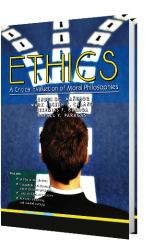
Ethics
Authors: Jensen DG. Mañebog, Mark Joseph T. Calano, Jeremias F. Buraga, Rafael Y. Paragas
HAVING A SENSE of morality is one of the things that differentiates us from animals. By nature, we are sincerely concerned with what is right and what is wrong in human behavior. Unlike animals, we care about living out ethical principles.
Since we can elicit abstract concepts such as truth, righteousness, and goodness, reflection about morality has been an essential element of human civilizations. Around the world, people ask basic moral questions such as, “What is the good?” “What makes a life a good life?” “What are the virtues of a human being?” and “What duties do we have to each other?”
A course in Ethics is thus undoubtedly fundamental and necessary. The subject significantly helps in endorsing valuable moral and social values like cooperation, social responsibility, respect for human rights, compliance with the law, and peace preservation. As Ethics calls for rational and righteous living, it encourages making good choices and living a purposeful and meaningful life.
ETHICS: A Critical Evaluation of Moral Philosophies was written to serve as a comprehensive introduction to the study of morality and ethical evaluation. It humbly aims to help the readers develop a conscious ethical sense and become critical in choosing a moral philosophy to live by.
Some Features of this Book:
This book possesses various features that make it an effective tool for both instructor and students:
- Written in module form. Each lecture comes with other important elements like objectives, discussions, activities, self-tests, and others which make each module a holistic learning package.
- Compatible with distance/online education program. Having ample experience in teaching under distance learning program, the authors also designed this book for online students. Modular in form, the book is self-taught so students can also advance at their own pace. Online students' responses to activities, self-tests and discussions may be sent to their respective professors through e-mail.
- Uniquely filled with analyses. Unlike many Ethics books, its modules do not only present and explain the various moral philosophies but also critically evaluate them by deeply examining them in detail.
- Advocates e-learning and blended learning. When adopted by professors, many instructions under Activities will allow students to further learn from additional online lectures which were already screened and filtered by the authors. Some activities are even programmed to let the students experience engaging in intellectual discussions with other people anywhere in the world online.
To the Professors:
If used creatively, this book could also integrate the development of thinking abilities with the four language skills so crucial to success in college and careers: reading, writing, speaking, and listening. Through thought-provoking readings, writing assignments (answering questions in the 'discussions,' reaction papers, and essays), and discussion exercises, students can improve their language skills.
Each module is purposely designed to comprise the following parts:
- A set of specific objectives which allows readers to anticipate the concepts, principles or skills they will learn in the module.
- The lecture proper which presents and discusses in details the topics.
- The analysis part where the critical evaluation and appraisal of the ethical theory could be read.
- Discussions which contain questions and guide topics professors can use during lectures, or for recitation and evaluation. These lead the students to further internalize the subject matter.
- Activities which provide students with means through which they can further internalize the topic or experience how the concepts can be applied. These can also serve as pre-lecture or post-lecture homework, or classroom task when the professor could not attend class.
- Self-tests which measure how well the students comprehend the lecture. Professors may use them for evaluation (quiz, pre-test, etc.).
- Professors under distance learning program may supplement this book, for instance, by providing a calendar of deadlines on which online students have to submit their responses (answers to self-test, reactions to discussions, products for activities, etc.).
- Ultimately, professors arc free to treat each module either as a self-contained unit or as a launch pad to other teaching-learning processes.
- To the Students:
- This book is designed to help you become knowledgeable and critical about various moral theories. Hopefully, this could also help you become better in reasoning skill, a quality which you can subsequently apply to your other academic subjects and various facets of life. The lectures, moreover, call for you to provide context for the topics by eventually considering them in forming or modifying your personal beliefs and principles.
- To online students, you should treat this book as your personal tutor. By dedicatedly reading the lectures and faithfully accomplishing all the things required by your assigned professor, you can teach yourself the necessary knowledge and skills related to Ethics. Remember that those competencies cannot be acquired by unintelligently subscribing to 'cut-and-paste' malpractice in accomplishing your tasks and assignments.
- To all students, if you wish to benefit much from this Ethics book, you should be ready to dedicate as much time as necessary. Taking this book seriously will help you transform into an intellectually mature, creative, and responsible moral person.
-
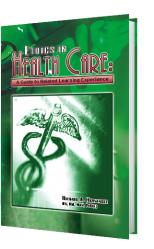
Ethics in Health Care
Author: Richard A. Hernandez
To act without rapacity, to use knowledge with wisdom, to respect interdependence, to operate without hubris and greed are not simply imperatives, they are an accurate scientific description of the means of survival
— Barbara Ward
You've got to be brave and you've got to be boa Brave enough to take your chance on your own discrimination — what's right and what's wrong, what's good and what's bad.
— Robert frost
Nursing is an important field in healthcare as it is the process for caring for, or nurturing client in all health care setting. It also refers to the care carried out by any individual who has had formal edification and preparation in the art and science of nursing. To further provide satisfactory service to their patients, nurses also have to observe moral and ethical principles and practices, as ethics and morals may serve to provide dilemmas and conflicts in rendering sufficient service to patients. In addition, ethical principles and morals must be properly given importance and significance in the nursing practice to ensure that the well-being and health of the patients would be given priority, thus, upholding and promoting the moral aspect of the practice. Ethical nursing practice involves the performance of nurses' roles and responsibilities which is facilitated with integration of social justice towards the promotion of life. Nurses should endeavor as much as possible individually and as a group to advocate for and eliminate social inequities, injustice and discrimination.
Today, nursing students are expected to think critically, and to utilize moral and ethical principles in carrying out their responsibilities during their related learning experiences. This book was made possible in anticipation of meeting learning needs, albeit the approach is synthesis of conceptual and theoretical highlights. Moreover, the purpose of this hook is to assist students integrate concepts of holistic nursing with the application of appropriate ethical and moral principles to all types of patients anytime in any health care setting.
Organization of the Text
Chapter 1: Ethics and Nursing Care focuses on the discussion of morality of an act and the significance of ethics in the health care industry.
Chapter 2: Approaches in Ethics highlights the factors to be considered in making decisions which are moral.
Chapter 3: The Roles of Nurse Ethicist enumerates the responsibilities of nurses to their patients, physicians and among others who are connected in the promotion of the client's welfare.
Chapter 4: Bioethical Principles discusses certain principles of ethics to be considered in making decision in times of conflicting issues, especially those that question the morality of an act.
Chapter 5: Issues on Family Planning discusses the different methods of natural and artificial family planning. It also enumerates propositions for and against institution of family planning.
Chapter 6: Issues on Abortion provides a discussion of different types of abortion and how the community at large reacts on the morality of this act.
Chapter 7: Issues on Euthanasia describes the different forms of euthanasia and enumerates some of the religious objections.
Chapter 8: Issues on In Vitro Fertilization describes the in vitro fertilization and discusses the morality of this act.
Chapter 9: Issues on Stem-cell Research describes stem cell and enumerates propositions for and against researches on stem cells.
Chapter 10: Issues on Medical Tourism focuses on the description, process and history of medical tourism and enumerates some of its legal and moral implications.
-
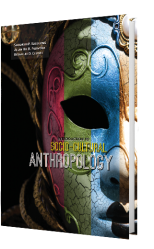
Flat Socio-Cultural
Authors: Saidamin P. Bagolong, Allan Hil B. Pajimola, Bryan Lee D. Celeste
The purpose of this textbook is to serve as a reference for an introductory course in Anthropology. This war, focus on concepts and theories of anthropology combined with both social and cultural understanding of humankind. Moreover; this will define basic terms of the course and how it can change your view of the world around you.
The textbook is likewise designed to facilitate the integral development of students for them to effect changes in the self as well as in the environment, thereby realizing the fullness of human life.
Even though this is an introductory textbook, we deliberately retain most of the salient features of anthropology as fairly new academic discipline.
This textbook could not have been written without help from many people whose ideas we have borrowed, modified and incorporated. We owe these people a special debt.
-

Food Safety and Sanitation
Authors: Mary Jean C. Ang, Hannah A. Balanon, Celia E. Cariño, Eunice D. Guerero, Marilou P. Pascual, Ma. Cecilia P. Pradez
Laboratory Manual for Principles of Food Safety and Sanitation with HACCP is a set of exercises to facilitate and enhance learning of the fundamental concepts of food safety, sanitation and hygiene and HACCP standards.
This laboratory manual is specifically designed for students in the food service and hospitality management courses, allowing them to apply and correlate many of the food safety concepts with various activities.
Organization of this manual is of two parts: Part I contains exercises for food safety and sanitation such as procedures for the identification of biological, chemical and physical hazards of food and Part II contains exercises applying the principles of Hazard Analysis and Critical Control Points (HACCP).
Each exercise comes with a Title – an overview of the content; Principles – bases of the underlying concepts and procedures; Objectives — competencies that every student should gain after each exercise; Materials — list of instruments, equipment supplies and reagents that will be used for each exercise; and Assessment — questions to evaluate learning.
The sequence of exercises is arranged in a way that will demonstrate the progression of the student from learning and mastering simple to complex procedures of food safety and sanitation with HACCP.
Considering these parameters, the purpose of this laboratory manual is to guide students through a process of development of experimentation, interpretation of data, and discovery in a manner that will complement the lecture and make the study of food safety and sanitation with HACCP both exciting and challenging.

-
Basic Marketing
-
Biological Science (Caballes)
-
Biological Science (Cajuday)
-
Business and Finance
-
Bussiness Mathematics
-
Creative Nonfiction: A Journey
-
English for Academic and Professional Purposes
-
Essential Statistics
-
Ethics
-
Ethics in Health Care
-
Flat Socio-Cultural
-
Food Safety and Sanitation
Copyright © Mutya Publishing House, Inc. All Rights Reserved, 2020