Mutya Publishing House, Inc.
  • Home
  • Our Product
    • Filipino 1
    • Filipino 2
    • Filipino 3
    • Other Filipino
    • English 1
    • English 2
    • English 3
    • English 4
    • English Major
    • PE
    • Ethics
    • History
    • Computer
    • Philosophy
    • Psychology
    • Rizal
    • Science
    • Sociology
    • HRM
    • Spanish
    • Math
    • Drawing
    • Business
    • Humanities
    • NSTP
    • Logic
    • Others
  • About Us
  • Contact Us
  • Self-learning Modules
Prev
  / 
Next

Biological Science (Caballes)

Authors: Dennis G. Caballes, Jennifer S. Florida

The concept approach of the book is suitable for undergraduate non-Biology major students. The book is designed to be useful workbook for students enrolled in Biology subject. It is divided into eight units which cover major topics such as cell biology, genetics, evolution, ecology, biological diversity and plant and animal biology. Each part has balanced coverage of all topics sufficient for a semester-long course in Biology. The authors considered these topics as important pans of biology which will provide the core knowledge in science.

The opening unit of the book gives an overview of how the field of Biology is studied and explored using scientific method. Unit II deals with biological molecules that account for the structure, function and even the origin of cells. The next unit provides discussion on energy and metabolism which is the central phenomena in the study of biological organisms. It is followed by the study of heredity and the evolutionary process in the heritable characteristics (Unit IV). Basic ecology concepts are introduced in Unit V while biodiversity is main focus of discussion of Unit VI. The last unit deals with plant and animal biology. Each chapter included in every unit is provided with self-assessment part which includes quick recall questions and questions that elicit critical thinking. Moreover, helpful materials that would reinforce learning are appended towards the end in an effort to provide additional information among the users of this book. Furthermore, laboratory exercises are incorporated for each chapter in order to supplement the concepts learned in the lecture and to make them responsible in their own learning through manipulation and discovery.

The authors of this book have been friends and colleagues for several years and, while they have often discussed writing a book together, the timing never seemed quite right. Finally, they put their heads together to come up with a “generic” book suitable for non-science students with different major and coming from various institutions. The authors' collection of lecture notes from several years of teaching Biology is the basis of the content of this book. Any comments or suggestions for the improvement of this book will be appreciated.

Categories: Our Product, Science. Tags: College Books, Dennis G. Caballes, Jennifer S. Florida, Science.
share on
Facebook
pin this item
on Pinterest
share it on
Twitter
Send to a
friend

Related Products

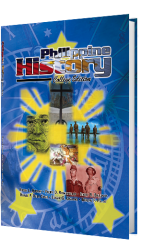
  • Philippine History (UM)

    Authors: Deanna Febra Gillera Cantal,  Roen Caesar S. Cardinal,  Lindsey C. Espino,  Maribeth Quezon Galindo

    Many students may think that its irrelevant to study Philippine history subject since they could not change the past nor they have not seen the relevance

    subject itself and its relation to the course that they take up. Others may think that a boring subject full of memorization with dates, places, persons, events and others. Thus, this kind of perception may be placed in the context of students experiences on how they think, they look and they feel about the subject.

    A glimpse that Philippines was controlled by foreign colonizers for almost 400 years that during colonization period Filipinos were not taught their own history but rather they were taught the history of colonizers WHILE they were in our country and seemingly, Filipinos were trained like a parrot which resulted students less understanding and less appreciation of our own history.

    Hopefully, as students explore the history of the Philippines, they may see the fact that as a true blooded Filipinos, the fact that every generation was and will always be a product of History, Philippine history is still and will always be a relevant subject :1 regardless of what course a student takes up. Students may realize whatever mistakes 1 in the past are, the present generation may not repeat it and the future generation will be freed from the bondage of ignorance, tyranny and slavery. Students may develop a deep sense of commitment to serve God and love our country.

    Likewise, this textbook, may challenge new breed of historians and history teachers to go beyond dates, places, persons, events etc. Teaching the how's and why's of historical events will train students to be analytical and critical minded individual. Further, teachers may have seen the importance of contextualization so that students may have developed a deeper understanding of their origins, interpret historical events in a broader perspective and develop in them to be actively involved in non-violent; manner to any issues which have affected Filipino lives.


  • Philippine History (BLUE)

    Authors: Efren L. Quiray,  Felipe D. Romanillos,  Emily B. Baluyot,  Ronel P. Dela Cruz,  Edgar G. Galang,  Berlyn F. PA-AT

    Re-creating or putting fresh life into a story is a new way of looking at the established history. Human history must not be told like a dead thing. It must be narrated with life so that learning will be interesting. Further, it must not be viewed from one angle only It must be examined from different perspectives with life. There is emotion, truth, and action. Hence, the application of outcomes-based teaching and learning or OBTL approach in teaching Philippine History is suggested. This is a departure from the usual narrate-listen approach. In OBTL, the students are not just observers or listeners but they are actors themselves. The students will have a chance to play the roles of heroes or historical personages long dead in the past.

    The usual story about Bonifacio, for instance, is repeatedly told in our history books without considering other angles and possibilities of the events surrounding his lifetime that led to his tragic end. The pattern is one-dimensional so that other facets of his life are not included as part of his history. From this old pattern, this new shift of re-creating or putting fresh life into the story• of Bonifacio and the Katipunan is introduced as a new direct operating system — from the locked type of learning to democratic type. Here, other possibilities of learning are applied to give students freedom to think and present new perspectives.

    Why should we use this new approach? If our history were written alive, reading it would be interesting. The story about our heroes' fight for freedom must be made easy to read by the students. One way of doing this is putting fresh life into their stories. The significant achievements of our heroes such as Rizal, Bonificio, and many others must be portrayed with touch, sight, taste, hearing, and feeling. This will make written history more Pilipino that could show settings common to our racial and geographical bond. Thus, the meaning of our heroes' fight for freedom will be set vividly in the students' minds and hearts.

  • Kasaysayan ng Pilipinas

    May akda: Eric C. Claudio,  Teodora Luz Soto Mangahas

    Ang pag-aaral ng kasaysayan ay hindi kalugod-lugod sa karamihan ng mag-aaral na kumukuha ng asignaturang ito. Subalit sila ay kinakailangang kuhanin ito upang ipasa at tapusin ang kanilang kurso. Sa dahilang ito, ang mga may akda ng aklat na ito ay pinilit at pinagsikapang talakayin ang kasaysayan ng Pilipinas sa pinakamadali at kalugod-lugod na pamamaraan.

    Ang pagiging Pilipino ay hindi lamang ang pagsilang at pamumuhay sa Pilipinas bagkus ito ay ang pagkakaalam ng kanyang pinagmulan at tuloy ang kanyang patutunguhan. Kung ang bawat Pilipino ay clam ang kanyang kasaysayan, marahil ay ni sa guni-guni ay hindi niya nanaisin na ito ay talikuran at talikdan. Mayaman ang kasaysayan ng Pilipinas sa mga magaganda at kaakit-akit na gunita, ito ay parang terra ng pelikula na bumangon sa kanyang pagkakalugmok upang durugin ang kanyang mang-aapi at tuluyang tumayo sa kanyang sariling mga paa.

    Ang kasaysayan ng isang bansa ay kapupulutan ng maraming anal at kaalaman na maaaring gawing batayan ng mga susunod na henerasyon. Ito ay magsisilbing pamantayan at lakas ng boob upang ipagpatuloy ang buhay na nasimulan kahit na sa kanyang tingin ay may mga balakid na nagtutulak sa kanyang maging tuliro sa kanyang pagkatao bilang mamamayan rig kanyang bansa.

    Sa ating pag-aaral ng kasaysayan, matutuklasan nating lahat – lahat ng bansa gaano man kaunlad ay may pinagmulang kahirapan at kabiguan at gaano man kalakas ay may kagustuhang maging malaya o patuloy na maging malaya. Ang Pilipinas ay hindi kaiba sa lahat ng bansa, dumaan ito sa ib'at ibang pagsubok ng panahon tulad ng mga rebolusyong madugo at pati na rin ang mapayapa. Mababatid na ang Pilipinas ay may kasaysayang binigyang kulay at bahid ng iba't ibang bansa sa kanluran at silangan na sumakop at nag impluwensiya dito. Bagamat ang mga bansang ito ay nagbigay ng bagong kabihasnan sa ating bansa subalit hindi nangangahulugang tayo ay wala pang kabihasnan bago pa man dumating ang mga mananakop.

    Sa boob ng mahabang panahon, ang Republika ng Pilipinas ay nagkaroon ng labing apat na pangulo at sa bawat pamumuno ng mga ito ay masisilayan ang pagkabigo at pagtatagumpay ng kanilang mga hakbangin upang itaguyod at paunlarin ang ating bansa. Sa boob ng mga panahong ito ay matutunghayan natin ang pagbulusok at pagbangon ng ating bansa. Magugunita ang panahon ng diktadura ni Pangulong Ferdinand E. Marcos na halos dalawampu't dalawang taon subalit tinapos lamang sa boob ng apat na araw ng isang mapayapang rebolusyon. Dagdag pa dito, ang pamumuno ni Pangulong Joseph E. Estrada na

    diumano'y punong-puno ng katiwalian.

    Sa ilalim ng Pangulong Gloria Macapagal Arroyo na siyang pumalit kay Estrada ay patuloy ang mga hamon sa ating bansa. Patuloy ang paglaban, pagsisikap at patuloy ang paggawa ng kasaysayan ng Pilipinas.

    Isang panaginip na sandy lahat ng Pilipino scan mang panig ng mundo ay magkaroon ng kaalaman at interes sa kasaysayan ng kanyang bansa sapagkat dito lamang nya malalaman ang kanyang patutunguhan at tuloy maiwasan ang mga pagkakamali ng kanyang mga ninuno. Masarap ihatid sa susunod na henerasyon na ang kasalukuyang Pilipino kagaya mo at ako ay ginawa ang dapat gawin upang mahalin ang ating bansa sapagkat tayo ay may magagawa ngayon at ito ay ating gagawin.

    Ang pag-unlad ng isang bansa ay nakasalalay sa pagkakaalam niya ng kanyang kasaysayan. Ayon nga sa ating pambansang bayaning si Dr. Jose Rizal, “Ang Pilipinas ay hindi maunlad kaya ang mga Pilipino ay tinatamad”. Samakatuwid, kung ang Pilipinas ay maunlad, ang mga Pilipino ay magkakaroon ng pagkakataon upang ipakita ang kanilang buong talento para dito.

Copyright © Mutya Publishing House, Inc. All Rights Reserved, 2020