Mutya Publishing House, Inc.
  • Home
  • Our Product
    • Filipino 1
    • Filipino 2
    • Filipino 3
    • Other Filipino
    • English 1
    • English 2
    • English 3
    • English 4
    • English Major
    • PE
    • Ethics
    • History
    • Computer
    • Philosophy
    • Psychology
    • Rizal
    • Science
    • Sociology
    • HRM
    • Spanish
    • Math
    • Drawing
    • Business
    • Humanities
    • NSTP
    • Logic
    • Others
  • About Us
  • Contact Us
  • Self-learning Modules
Prev
  / 
Next

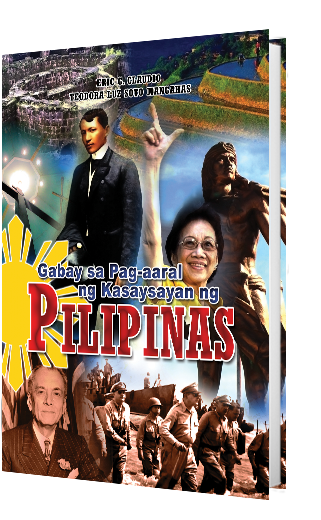
Kasaysayan ng Pilipinas

May akda: Eric C. Claudio,  Teodora Luz Soto Mangahas

Ang pag-aaral ng kasaysayan ay hindi kalugod-lugod sa karamihan ng mag-aaral na kumukuha ng asignaturang ito. Subalit sila ay kinakailangang kuhanin ito upang ipasa at tapusin ang kanilang kurso. Sa dahilang ito, ang mga may akda ng aklat na ito ay pinilit at pinagsikapang talakayin ang kasaysayan ng Pilipinas sa pinakamadali at kalugod-lugod na pamamaraan.

Ang pagiging Pilipino ay hindi lamang ang pagsilang at pamumuhay sa Pilipinas bagkus ito ay ang pagkakaalam ng kanyang pinagmulan at tuloy ang kanyang patutunguhan. Kung ang bawat Pilipino ay clam ang kanyang kasaysayan, marahil ay ni sa guni-guni ay hindi niya nanaisin na ito ay talikuran at talikdan. Mayaman ang kasaysayan ng Pilipinas sa mga magaganda at kaakit-akit na gunita, ito ay parang terra ng pelikula na bumangon sa kanyang pagkakalugmok upang durugin ang kanyang mang-aapi at tuluyang tumayo sa kanyang sariling mga paa.

Ang kasaysayan ng isang bansa ay kapupulutan ng maraming anal at kaalaman na maaaring gawing batayan ng mga susunod na henerasyon. Ito ay magsisilbing pamantayan at lakas ng boob upang ipagpatuloy ang buhay na nasimulan kahit na sa kanyang tingin ay may mga balakid na nagtutulak sa kanyang maging tuliro sa kanyang pagkatao bilang mamamayan rig kanyang bansa.

Sa ating pag-aaral ng kasaysayan, matutuklasan nating lahat – lahat ng bansa gaano man kaunlad ay may pinagmulang kahirapan at kabiguan at gaano man kalakas ay may kagustuhang maging malaya o patuloy na maging malaya. Ang Pilipinas ay hindi kaiba sa lahat ng bansa, dumaan ito sa ib'at ibang pagsubok ng panahon tulad ng mga rebolusyong madugo at pati na rin ang mapayapa. Mababatid na ang Pilipinas ay may kasaysayang binigyang kulay at bahid ng iba't ibang bansa sa kanluran at silangan na sumakop at nag impluwensiya dito. Bagamat ang mga bansang ito ay nagbigay ng bagong kabihasnan sa ating bansa subalit hindi nangangahulugang tayo ay wala pang kabihasnan bago pa man dumating ang mga mananakop.

Sa boob ng mahabang panahon, ang Republika ng Pilipinas ay nagkaroon ng labing apat na pangulo at sa bawat pamumuno ng mga ito ay masisilayan ang pagkabigo at pagtatagumpay ng kanilang mga hakbangin upang itaguyod at paunlarin ang ating bansa. Sa boob ng mga panahong ito ay matutunghayan natin ang pagbulusok at pagbangon ng ating bansa. Magugunita ang panahon ng diktadura ni Pangulong Ferdinand E. Marcos na halos dalawampu't dalawang taon subalit tinapos lamang sa boob ng apat na araw ng isang mapayapang rebolusyon. Dagdag pa dito, ang pamumuno ni Pangulong Joseph E. Estrada na

diumano'y punong-puno ng katiwalian.

Sa ilalim ng Pangulong Gloria Macapagal Arroyo na siyang pumalit kay Estrada ay patuloy ang mga hamon sa ating bansa. Patuloy ang paglaban, pagsisikap at patuloy ang paggawa ng kasaysayan ng Pilipinas.

Isang panaginip na sandy lahat ng Pilipino scan mang panig ng mundo ay magkaroon ng kaalaman at interes sa kasaysayan ng kanyang bansa sapagkat dito lamang nya malalaman ang kanyang patutunguhan at tuloy maiwasan ang mga pagkakamali ng kanyang mga ninuno. Masarap ihatid sa susunod na henerasyon na ang kasalukuyang Pilipino kagaya mo at ako ay ginawa ang dapat gawin upang mahalin ang ating bansa sapagkat tayo ay may magagawa ngayon at ito ay ating gagawin.

Ang pag-unlad ng isang bansa ay nakasalalay sa pagkakaalam niya ng kanyang kasaysayan. Ayon nga sa ating pambansang bayaning si Dr. Jose Rizal, “Ang Pilipinas ay hindi maunlad kaya ang mga Pilipino ay tinatamad”. Samakatuwid, kung ang Pilipinas ay maunlad, ang mga Pilipino ay magkakaroon ng pagkakataon upang ipakita ang kanilang buong talento para dito.

Categories: History, Our Product. Tags: College Books, Eric C. Claudio, Kasaysayan ng Pilipinas, Teodora Luz Soto Mangahas.
share on
Facebook
pin this item
on Pinterest
share it on
Twitter
Send to a
friend

Related Products

  • Philippine Government and Constitution

    Authors: Atty. Sherwin Prose C. Castañeda,  Dr. Rolando A. Bernales,  Prof. Juan Jaime D. Nolasco,  Prof. Mark Roy L. Boado,  Prof. Tristan A. Reyes
    with
    Prof. Emily B. Baluyot,  Dr. Romero E. Javier,  Prof. Bernalyn F. Pa-at,  Prof. Nestor C. Vallestero,  Dr. Joy C. Villahermosa

    This book is primarily intended for the undergraduate study in government and the 1987 Constitution. This, however, may very well serve as a handy reference not only to college students but also to every person interested in acquiring knowledge of the basic framework of our government.

    This book grew out from the lectures and notes made by the authors while teaching the course and/or while studying Law. Said lectures and notes were later on consolidated into a book in the attempt to present to the readers a simplified but complete text in the study of Philippine Government and the 1987 Constitution.

    Varied activities were suggested alter each discussion to reinforce learning. These activities may also be employed as the professor's alternative assessment tools. It is hoped that these activities wilt make the study of this course more meaningful and interesting for the students.

    Tests were likewise provided after each chapter. The tests herein provided may be employed by the professor either as models for test construction, assignments For the students or evaluation instrument of how much the students mastered the objectives enumerated before each discussion. Should the professor decides to make use of the tests as tools for evaluating students' mastery, the authors suggest that the professor be not limited by the items provided as these tests are open for revisions depending on the emphasis made during the class discussions or on other factors that may warrant such professor's discretion.

    The authors extend their heartfelt thanks to their respective family, relatives, colleagues,, and friends for their unending support, love,, and inspiration.. The authors also like to extend their deepest gratitude to all persons who contributed to the realization of this work; and most of all to Almighty God for the gift of knowledge and for all His blessings.

    This humble work is dedicated to all those who share the authors' dream of great things for our beloved Country.
    Mabuhay ang sambayanang Pilipino!

  • Values Education

    Authors: Ma. Kathleen C. Tiglao, Ph.D.,   Georadelia T. Lungay, RGC,  Piere John H. Caliao, MA. Ed.,  Philip Albert Y. Lagahid, MA

    School is one of the agents from where the personality of human individual would form, it might not be the sole influence but it contributes a lot to the life of an individual since, the basic education system of our country requires the individual to stay in school more than 8 hours a day, 5 times a week_ Through this, one might showcase his/her identity from where he/she is coming and what culture does it bring. Thus, everyone should have the same culture and values as Filipino people who are living in the same country.

    This work/textbook is one of the tools that will help educators, parents and leaders in instilling values to young individuals, most especially the students. Though the parents are the first teacher of values to their children, we can hardly deny the fact that every parent have their own ways and practices of their values.

    The content of this work/textbook focuses on the human seven core values namely: Truth, Spirituality, Love, Economic Efficiency, Health. Patriotism and Nationalism, and Social Responsibility. From these core values, good Filipino values were formed and developed which means these are the sources of all Filipino values that we have. By knowing these values, we are able to really understand why we have such practices that other countries do not have and why there is belief that other countries do not have. Aside from knowing these values, we will also be informed that we have to, as well, become cognizant of their negative effects on individuals and on others.

    The following chapters will give a short and concise practical explanation on the seven (7) core values that Filipino people have. Each chapter contains pre-activity, post-activity and post evaluation as well. The pre-activity will check the students' existing knowledge, practices and beliefs that they have on a specific value. The post activity after every discussion will check the learning experience of the students. While the post-evaluation makes the students reflect on how they are going to apply it to themselves, affect other people and improve the community in their own way.

  • National Service Training Program (with Common and Specific Modules)

    Authors: Rogelio I. Espiritu,  Maria Rosario E. Monce,  Madeleine M. Co,  Jayme C. Ignacio,  Katherine C. Guevarra

    With the aim of giving quality teaching and learning experience to teachers, students as well as other community developers, social workers and others doing extension and community services, this worktext is conceptualized and realized.

    This hook is divided into two (2) parts:
    Common Module — Enhancing Awareness to Social Issues and Problems; and
    Specific Module — Developing Oneself Thru Community Involvement
    At the end of each chapter are worksheets, which will be answered by the students. These will serve as a form of evaluation on the extent of learning they have gained from each chapter.

    This hook hopes to fulfill the objectives of the National Service Training Program (NSTP); i.e., to bring back the awareness of students as well as mentors of various traits and values, namely: civic responsibility, patriotism, leadership, assertiveness, concern for people and environment and lastly, to be an active mobilizer of the community working together to solve problems and issues confronting them.

Copyright © Mutya Publishing House, Inc. All Rights Reserved, 2020