Mutya Publishing House, Inc.
  • Home
  • Our Product
    • Filipino 1
    • Filipino 2
    • Filipino 3
    • Other Filipino
    • English 1
    • English 2
    • English 3
    • English 4
    • English Major
    • PE
    • Ethics
    • History
    • Computer
    • Philosophy
    • Psychology
    • Rizal
    • Science
    • Sociology
    • HRM
    • Spanish
    • Math
    • Drawing
    • Business
    • Humanities
    • NSTP
    • Logic
    • Others
  • About Us
  • Contact Us
  • Self-learning Modules
Prev
  / 
Next

Rizal and Human Dignity

Authors: Wilson S. Chua, Ph.D

Our country had been set apart to have a hero in the person of Dr. Jose Rizal, At the tender age of eight, he was already aware of the importance of nationalism and began honing his artistic talents for the country, as can be seen in his first poem “Sa Aking mga Kabata”. Although extraordinarily gifted, Rizal chose not to enrich himself with his God-given talents but instead try to uplift our country by reaching out to Filipinos through his writings. Each one of Rizal's work of art is a masterpiece, filled with human values, ideas, lessons, and principles that were deeply embedded within him. His works are timeless, the messages they convey still touch the lives of modern Filipinos just as they have touched the Filipinos during the Spanish era, filling their hearts with love for the country.

Included within these pages are some of Rizal's best poems and essays, every one of them filled with meaningful messages with which will enlighten and encourage the Filipinos who will read them to love and serve the country. With this purpose in mind, each literary piece featured here is accompanied by information as to when, where, and why it was written by Dr. Jose Rizal. Written commentaries by distinguished personalities are also presented for each literary piece. Furthermore, much effort had been exerted and diligence in presenting the various ideas and values that Rizal had been implanted within his poems and essays.

Let this short journey into the mind of Rizal through his poems and essays bear fruit in the lives of the readers, enriching them not only with fortitude but excellence and uprightness as a person. With every glimpse of Rizal's person mirrored in his words, let us not forget that there was once a man whose dreams were dedicated to the Philippines. His every labor was for the betterment of the Filipinos; his death was for the glory of the country. Let us stand witness to the greatness of the man called Dr. Jose P. Rizal.

Categories: Our Product, Rizal. Tags: College Books, Jose Rizal, Rizal, Wilson S. Chua Ph.D.
share on
Facebook
pin this item
on Pinterest
share it on
Twitter
Send to a
friend

Related Products

  • Physics 1 Lab Manual

    Authors: Irin M. Malajito, Mara Crisaliz B. Paras, Myra S. Ferrer

    This laboratory manual has been created to substantiate the concepts being presented during the lecture in Physics 1. It would be most beneficial if a particular theory will be presented to the students before an experiment is performed. The procedures in this manual are detailed, constructed step.by-step in order for the students to be independent in their performance of the experiment. The application questions link the concepts of physics with everyday scenario for better retention, and with industry practices in order to create mindset among students of their future tasks. The exercises will enhance the skills of the students in problem solving.

    OBJECTIVES OF PERFORMING THE ACTIVITY IN PHYSICS

    Laboratory work is designed to:

    familiarize students with the fundamental principle of the subject firsthand manipulation of apparatus and personal application of the principle studies.

    train students with the methods and thoughtful experience in experimentation, careful observation and honest recording of data, critical analysis, correlation and interpretation of experimental data

    familiarize students in the use of laboratory apparatus and techniques used in physical measurements

    train students in making valid and worthwhile conclusion from observed data.

  • Biological Science (Cajuday)

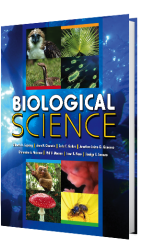
    Authors: Lilibeth A. Cajuday, Anne R. Dioneda, Carlo F. Galias, Jonathan Jaime G. Guerrero, Charmaine A. Malonzo, Phil V. Morano, Joan R. Nace, Jocelyn E. Serrano

    Teaching a pure science to non-science majors is a hard task. Teachers are faced with the challenging problem of explaining the complex structures of cells or the intricate chemical pathways in a simple and, in a sense, artful way. Vis-a-vis this simplicity is not losing the basic concepts. Striking a balance takes up a lot of creativity, of board and seat works, and other methodologies to bring home the message to students.

    Finally, this book creates another stepping stone in understanding the science of life. Unlike other textbooks, this Biological Science reference material takes into consideration the actual semestral time frame. It is equipped not just to teach directly but also to encourage self-exploration and culture of research. Besides, a university is a university because it is a generator of knowledge through a prolific research culture among students.

    Given this, it is the hope of the authors that this book serves its purpose. The study of biology is an interesting field regardless of background or skills and competencies. It is perhaps the most practical among the many branches of science. It does not talk about things too farfetched or blurred. It talks about our very self. We, you are the best manifestation of life. Thus, this book is about you, a narration of our physicalities and an explanation of our biological being.

  • Biological Science (Caballes)

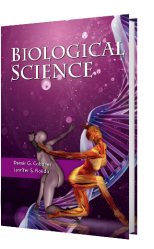
    Authors: Dennis G. Caballes, Jennifer S. Florida

    The concept approach of the book is suitable for undergraduate non-Biology major students. The book is designed to be useful workbook for students enrolled in Biology subject. It is divided into eight units which cover major topics such as cell biology, genetics, evolution, ecology, biological diversity and plant and animal biology. Each part has balanced coverage of all topics sufficient for a semester-long course in Biology. The authors considered these topics as important pans of biology which will provide the core knowledge in science.

    The opening unit of the book gives an overview of how the field of Biology is studied and explored using scientific method. Unit II deals with biological molecules that account for the structure, function and even the origin of cells. The next unit provides discussion on energy and metabolism which is the central phenomena in the study of biological organisms. It is followed by the study of heredity and the evolutionary process in the heritable characteristics (Unit IV). Basic ecology concepts are introduced in Unit V while biodiversity is main focus of discussion of Unit VI. The last unit deals with plant and animal biology. Each chapter included in every unit is provided with self-assessment part which includes quick recall questions and questions that elicit critical thinking. Moreover, helpful materials that would reinforce learning are appended towards the end in an effort to provide additional information among the users of this book. Furthermore, laboratory exercises are incorporated for each chapter in order to supplement the concepts learned in the lecture and to make them responsible in their own learning through manipulation and discovery.

    The authors of this book have been friends and colleagues for several years and, while they have often discussed writing a book together, the timing never seemed quite right. Finally, they put their heads together to come up with a “generic” book suitable for non-science students with different major and coming from various institutions. The authors' collection of lecture notes from several years of teaching Biology is the basis of the content of this book. Any comments or suggestions for the improvement of this book will be appreciated.

Copyright © Mutya Publishing House, Inc. All Rights Reserved, 2020